Money and journal
An expense tracker that reads like a diary
Dayline logs your expenses from plain sentences and, at night, writes a short page about your day from them: when it started, what you spent, ate and felt, and what’s still open. The numbers and the diary in one place.
For example: 1,200 groceries at DMart, then dinner with Priya, felt good
How it works
- Write it as it happensOne line at a time, or the whole day at night. Spends, meals, moods and plans can share a line.
- The numbers add upEvery spend lands in a category, against your monthly budget, with a daily pace.
- The page writes itselfAt night the day reads like a short diary page. The built-in story is written on your device; AI-written stories are optional and stay off until you turn them on.
Why money needs context
A spreadsheet tells you ₹2,400 went on food. A diary tells you it was three late dinners in a tiring week. Seeing spends next to moods and plans makes the pattern easier to notice, without judging yourself.
An example page
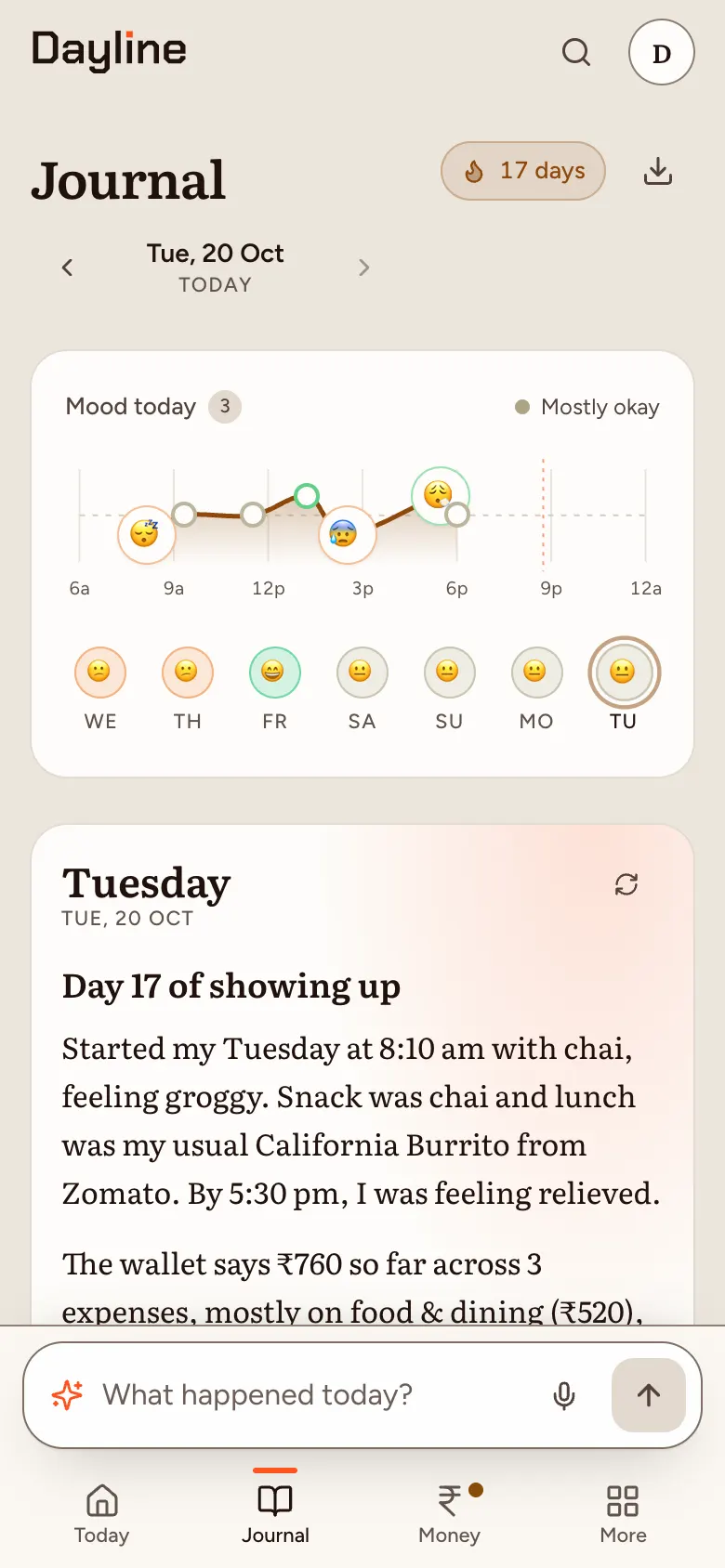
“The day began around 8:10 am with chai, feeling groggy. Snack was chai and lunch was my usual California Burrito from Zomato. By 5:30 pm, I was feeling relieved. Money-wise, ₹760 went out so far across 3 expenses, mostly on food & dining (₹520).”
From the demo day in our screenshots.
Private by default
Only you can read your diary. Not us, not anyone. Encrypted on your device before they sync. We, Cloudflare and anyone with a database copy or backup see only locked data. We don’t have the keys. With Standard AI, an AI reads your words but doesn’t keep them. What end-to-end encryption covers here.
Good to know. AI day stories (off until you turn them on) send the whole day’s log to the AI. Dayline doesn’t read your bank account or SMS: it counts what you log.
Free for everyone during the beta. Not available in the EU, EEA, UK or Switzerland yet.